
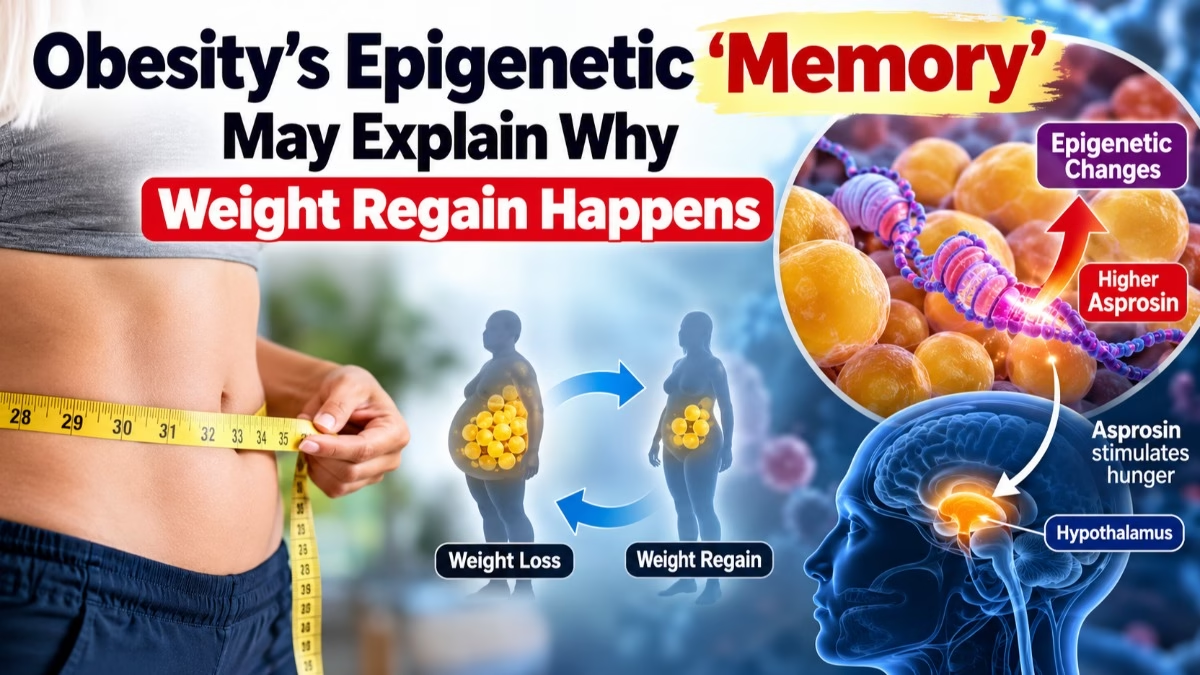
Epigenetic Memory of Obesity explains: why weight comes back after losing it
New research suggests that obesity may leave an “epigenetic memory” in fat cells, keeping the hunger hormone asprosin elevated and potentially contributing to weight regain—even after significant weight loss.
Losing weight can be difficult, but keeping it off may be an even bigger challenge. New research published in Cell Reports has identified a possible biological explanation: fat cells may retain an “epigenetic memory” of obesity that keeps the hunger hormone asprosin elevated even after weight is lost.
The New Research: What Did Scientists Find?
Researchers from Case Western Reserve University and the Harrington Discovery Institute investigated why weight regain is so common after obesity and why children of mothers with obesity may have a higher susceptibility to obesity.
Their study, published in Cell Reports in August 2026, focused on a pathway involving TGF-β1, fibrillin-1 (FBN1), and asprosin.
Asprosin is a hormone produced mainly by white fat tissue. It can act on the brain to stimulate appetite and increase food intake.
The researchers found that obesity-associated TGF-β1 can activate the Fbn1 gene in fat cells. This increases production of asprosin.
The surprising part was that the effect did not immediately disappear when the obesity-related signal was removed.
Instead, the researchers found persistent changes in chromatin—the structure that controls how DNA is packaged and expressed. In simple terms, the fat cells appeared to retain a molecular “memory” of their previous obese state.
Why Could This Cause Weight Regain?
In mouse models, animals that had previously developed obesity continued to have elevated asprosin after losing weight.
The higher asprosin levels were associated with increased food intake and faster weight regain when the mice were exposed to a high-fat diet again.
Even more interestingly, blocking the FBN1-asprosin-Ptprd pathway prevented the excess weight regain in the experimental models.
This suggests that weight regain may involve more than calories, exercise, or willpower.
The body can make biological adjustments after prolonged obesity that continue to push appetite and energy balance toward the previous higher weight.
Could This Also Explain Obesity Risk in Children?
The study produced another important finding.
When researchers exposed pregnant mice to elevated TGF-β1, their offspring later showed higher asprosin levels and greater susceptibility to diet-induced obesity.
The researchers therefore propose that maternal metabolic signals during pregnancy may influence the development of obesity-related biological programming in offspring.
However, this does not mean that a mother’s obesity determines whether her child will become obese. Genetics, diet, physical activity, socioeconomic factors and the family environment all influence obesity risk.
The maternal findings still need to be confirmed in humans.
This Is Not Just About Willpower
One of the most important implications is the changing understanding of obesity.
A 2024 study published in Nature found that both human and mouse adipose tissue can retain transcriptional changes after significant weight loss. In mice, persistent epigenetic changes were associated with faster rebound weight gain.
The 2026 Cell Reports research takes this idea a step further by identifying a specific TGF-β1–FBN1–asprosin pathway that could contribute to this biological memory.
This may help explain why maintaining weight loss can remain difficult even when someone continues making healthy lifestyle choices.
What Does This Mean for GLP-1 Weight-Loss Drugs?
The findings are particularly interesting as the use of GLP-1-based obesity treatments continues to expand.
Weight regain after stopping effective anti-obesity medication is already an important clinical issue. A 2026 review described weight regain as the result of interacting hormonal, neurological, metabolic and potentially epigenetic mechanisms rather than simply poor adherence.
The new asprosin research raises the possibility that future obesity treatments could eventually target the biological mechanisms that remain after weight loss.
But that possibility is not yet a treatment recommendation.
There is currently no approved asprosin-blocking therapy for routine weight management based on this study.
What Happens Next?
The biggest unanswered question is whether the same TGF-β1–FBN1–asprosin mechanism operates in people who have lost substantial amounts of weight.
Researchers will need to determine whether humans show persistent elevations in asprosin after weight loss and whether targeting this pathway can safely improve long-term weight maintenance.
For now, the study provides an intriguing new piece of the obesity puzzle.
The takeaway: weight regain appears to have a strong biological component, and researchers are beginning to identify specific molecular pathways that may help explain why the body resists maintaining a lower weight.
This research is promising—but it is still early science, not a proven human treatment
#ObesityResearch #WeightRegain #Asprosin #Epigenetics #WeightLoss
.
Sources and Further Reading
- Original Cell Reports research — Adipose TGFβ-asprosin memory promotes obesity relapse and offspring obesity susceptibility
- PubMed — 2026 Cell Reports study
- Nature — Adipose tissue retains an epigenetic memory of obesity after weight loss
- Case Western Reserve University — Research team’s explanation of the findings