
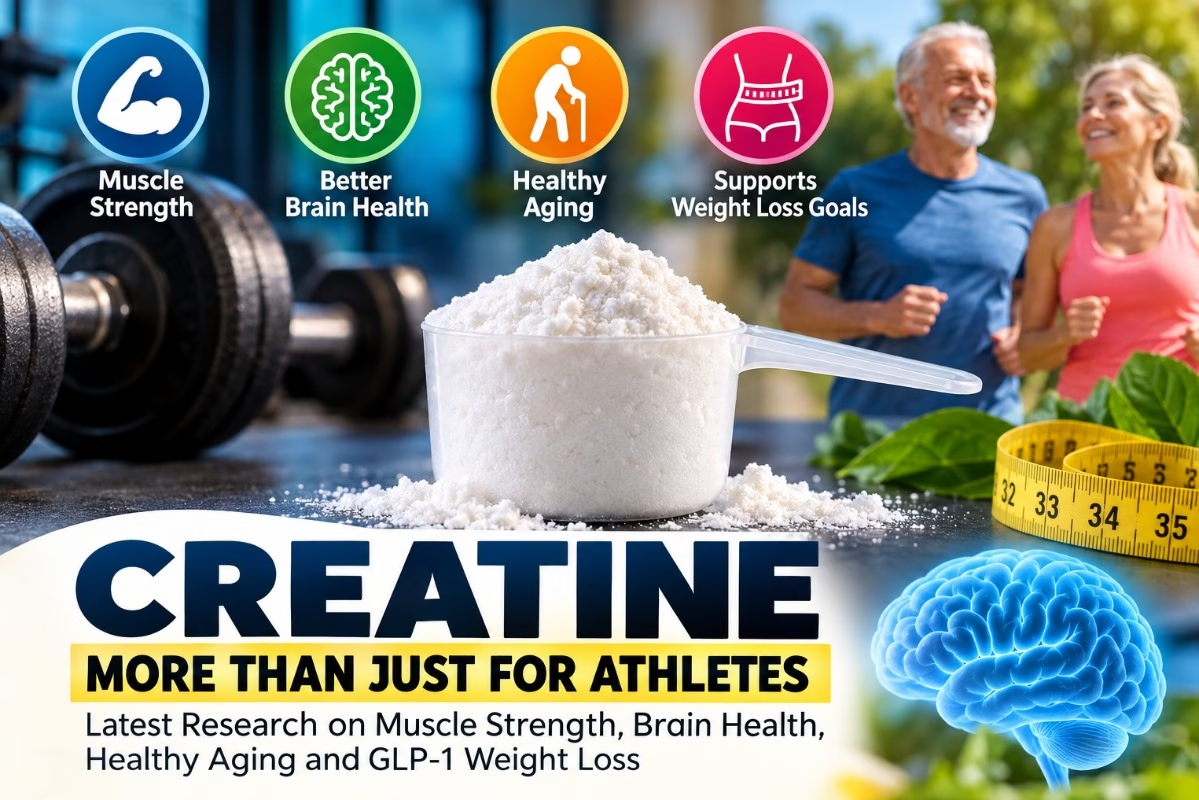
Creatine has a potential role in muscle strength, healthy aging, brain health and preserving lean muscle during weight loss.
Creatine is moving far beyond the gym, with new research examining its role in muscle strength, healthy aging, brain function and recovery. But as creatine becomes a mainstream wellness supplement, the real question is simple: what does the latest science actually support?
Creatine: What Is It and Why Does It Matter?
Creatine is a naturally occurring compound stored largely in skeletal muscle. It helps the body regenerate ATP, the immediate energy currency used during high-intensity exercise and many cellular processes.
For decades, creatine monohydrate has been one of the most extensively studied sports supplements. Research consistently supports its ability to improve strength, power and training adaptations when combined with resistance exercise.
A 2026 review again described creatine as one of the most extensively researched ergogenic aids, with evidence supporting improvements in exercise performance, strength and lean body mass.
The Big New Development: Creatine and Healthy Aging
This is where creatine is attracting much broader attention.
A 2026 systematic review and three-level meta-analysis examined 11 randomized controlled trials involving adults aged 60 and above. Creatine combined with resistance training produced a statistically significant improvement in muscle strength, although the effect was modest. The researchers did not find statistically significant improvements in muscle mass or physical function, and they rated the evidence for those outcomes as low or very low certainty.
Another 2025 meta-analysis involving 20 studies and 1,093 older adults found that creatine combined with exercise improved one-repetition maximum strength and produced a small reduction in body-fat percentage. However, it did not significantly improve bone mineral density.
The message is encouraging but realistic: creatine may help older adults get more from resistance training, particularly for strength. It should not be presented as a substitute for exercise.
Could Creatine Support Brain Health?
This area is promising, but the evidence is more complicated.
A 2024 systematic review and meta-analysis examined 16 randomized controlled trials involving 492 adults. Creatine supplementation produced significant improvements in memory, attention time and information-processing speed. However, it did not significantly improve overall cognition or executive function, and the researchers called for larger trials.
Another 2024 systematic review reached a more cautious conclusion, finding that creatine increases brain creatine levels but that evidence for actual cognitive improvement remains equivocal.
So, while the brain-energy theory is scientifically interesting, creatine should not yet be marketed as a proven memory or brain-health treatment.
What About Creatine and GLP-1 Weight-Loss Medicines?
This is one of the most interesting emerging areas.
GLP-1 medicines can produce substantial weight loss, but preserving muscle and strength during calorie restriction is increasingly important. A 2025 narrative review suggested that protein, resistance training and supplements such as creatine may have a role in supporting lean-mass preservation.
However, there is an important scientific limitation.
No randomized clinical trial has yet directly tested creatine supplementation in people undergoing GLP-1-based weight loss. Therefore, claims that creatine definitely prevents muscle loss during treatment remain unproven. The potential benefit is based mainly on evidence from other populations.
That distinction matters when evaluating supplement advertising.
Is Creatine Safe?
The latest evidence is reassuring for generally healthy adults.
A 2026 meta-analysis of randomized trials found that creatine increased serum creatinine but did not significantly change estimated kidney function or blood urea levels. The rise in creatinine may therefore reflect creatine metabolism rather than kidney injury.
A separate analysis covering 684 randomized clinical trials and more than 12,800 creatine users found no meaningful dose- or duration-dependent increase in overall side effects compared with placebo.
Still, people with existing kidney disease or other significant medical conditions should discuss supplementation with a healthcare professional before starting it.
The Bottom Line
Creatine’s reputation is changing. It remains a highly researched supplement for strength, power and exercise performance, but research is now exploring its potential contribution to healthy aging and brain energy metabolism.
The strongest current message is not that creatine is a miracle supplement. It is that creatine monohydrate, combined with appropriate resistance training, has a substantial evidence base and may be useful beyond traditional sports nutrition.
The science around cognition, longevity and GLP-1-associated muscle preservation is promising, but those areas still need better clinical trials.
For consumers, that distinction between what is established, what is promising and what is still hypothetical is perhaps the most important health message of all.
#CreatineBenefits #HealthyAging #MuscleHealth #BrainHealth #WeightLoss
Research Sources
- 2026 systematic review: Creatine, resistance training and older adults
- 2025 meta-analysis: Creatine and exercise in older adults
- 2024 systematic review and meta-analysis: Creatine and cognitive function
- 2024 systematic review: Creatine and cognition
- 2026 systematic review and meta-analysis: Creatine and kidney health
- 2026 analysis: Creatine dose, duration and side effects
- 2025 review: Dietary supplements during GLP-1 treatment
- 2026 article: Creatine for GLP-1-associated muscle loss