
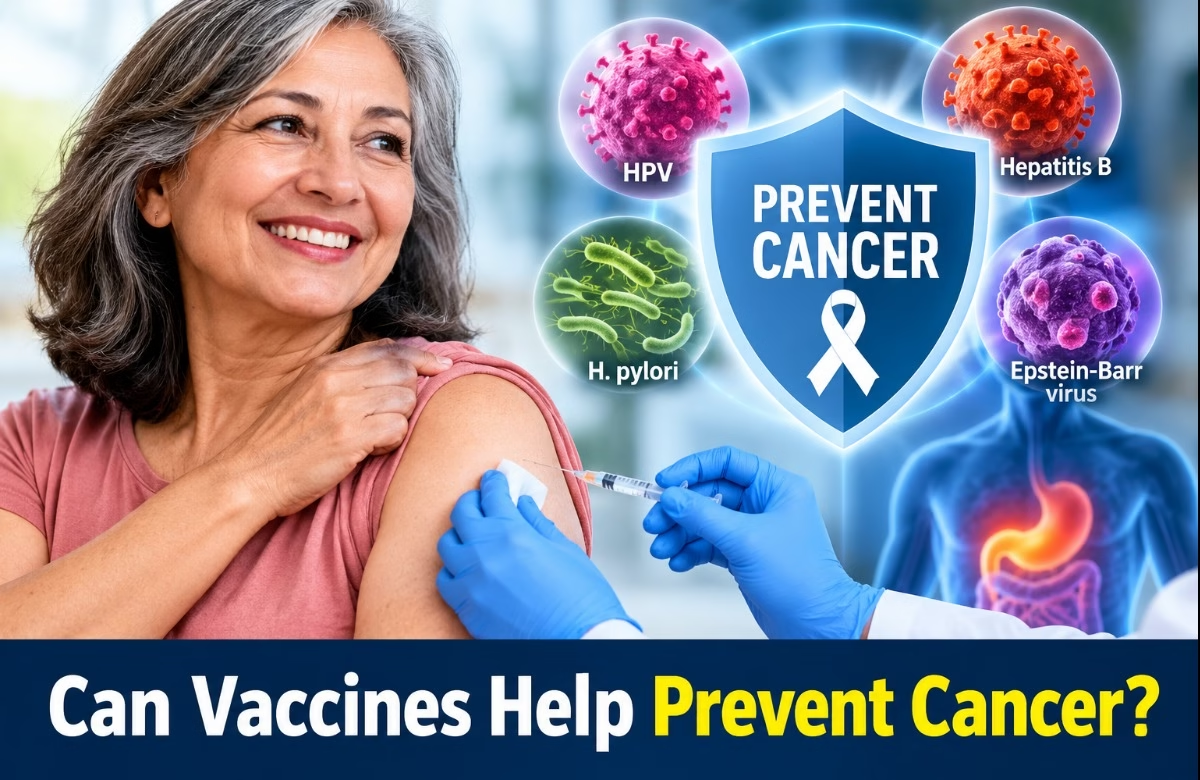
Cancer prevention:Vaccines Can Help Prevent Cancer-Causing Infections. Prevent the Infection. Reduce the Cancer Risk.
Cancer prevention is not only about diet, exercise and avoiding tobacco. New global research shows that infections caused by certain viruses and bacteria are linked to about 2.3 million new cancer cases worldwide, highlighting a prevention opportunity through vaccination, screening and treatment.
The message is encouraging: some cancer risks can be reduced before cancer ever develops.
How can infections cause cancer?
Not every infection leads to cancer. Most people who develop infections such as HPV or Helicobacter pylori never develop cancer.
However, certain infections can persist for years. Some can cause chronic inflammation, damage cells or interfere with normal cellular control. Over time, these changes can contribute to cancer.
The latest analysis from the International Agency for Research on Cancer (IARC) estimates that infections were responsible for about 12% of all new cancer cases worldwide in 2024. The study, published in The Lancet Oncology in September 2026, represents an updated assessment of infection-related cancer burden.
The major contributors include:
- Helicobacter pylori — linked mainly with stomach cancer
- Human papillomavirus (HPV) — linked with cervical and several other cancers
- Hepatitis B virus (HBV) — linked particularly with liver cancer
- Epstein-Barr virus (EBV) — linked with several cancers, including some lymphomas and stomach cancers
- Hepatitis C virus (HCV) — also associated with liver cancer
The latest research also incorporates newer evidence about infection-cancer relationships, including additional cancers associated with EBV.
Which cancer-causing infections can be prevented?
This is where the research becomes particularly important.
HPV vaccination is one of the clearest examples of cancer prevention through vaccination. HPV is responsible for virtually all cervical cancers and is also associated with cancers of the anus, penis, vulva, vagina and oropharynx.
The CDC says HPV vaccination can prevent more than 90% of cancers caused by HPV. Protection is strongest when vaccination occurs before exposure to the virus.
Importantly, vaccination does not replace cervical cancer screening. Vaccinated women still need screening according to appropriate medical guidance.
Hepatitis B vaccination can also help prevent cancer
Hepatitis B is another infection with a direct connection to cancer prevention.
Chronic hepatitis B infection can lead to cirrhosis and liver cancer. The hepatitis B vaccine prevents HBV infection, thereby reducing one important pathway to liver cancer. The CDC recommends hepatitis B vaccination for eligible people and also recommends hepatitis B testing for adults.
For people who already have hepatitis B or hepatitis C, vaccination alone is not a treatment. Medical evaluation, monitoring and appropriate antiviral treatment may be important.
What about H. pylori?
Unlike HPV and hepatitis B, there is currently no widely used vaccine against H. pylori.
But this bacterium can often be detected and treated with antibiotics and other medicines. Eliminating the infection can reduce the risk of developing stomach cancer, particularly when treatment occurs before significant damage develops.
That makes testing and appropriate treatment another important part of infection-related cancer prevention.
The India connection
The new findings are particularly relevant to India.
Reporting on the 2026 study indicates that approximately 190,000 cancer cases in India were attributable to infection in 2024. HPV accounted for more than 100,000 of these cases, while H. pylori, EBV, hepatitis B and hepatitis C also contributed substantial numbers.
This highlights why vaccination, infection testing, treatment and cancer screening need to work together.
What should you remember?
You cannot vaccinate against every cancer. And vaccination does not guarantee that someone will never develop cancer.
But some cancer-causing infections are preventable or treatable.
The practical steps are straightforward:
- Ask your healthcare professional whether you or your children should receive HPV vaccination.
- Check whether hepatitis B vaccination is appropriate.
- Discuss testing for hepatitis B or C when medically indicated.
- Seek medical advice if H. pylori infection is suspected.
- Follow recommended cervical cancer screening.
- Remember that vaccines are prevention tools, not cancer treatments.
The latest research does not mean that cancer has become completely preventable. It does show something valuable: preventing certain infections can also prevent some cancers.
That makes vaccination and infection control an important part of modern cancer prevention.
#CancerPrevention #HPVVaccine #HepatitisB #CancerAwareness #HealthyAging
Sources and Further Reading
International Agency for Research on Cancer (IARC/WHO): Global burden of cancer attributable to infections in 2024.
World Health Organization: Human papillomavirus and cancer.
CDC: Vaccines and cancer prevention.
CDC: Cancers caused by HPV.
WHO: 2026 global HPV vaccine safety update.
Research paper: Rumgay H, Georges D, Huang Y, et al. Global burden of cancer attributable to infections in 2024: a worldwide incidence analysis. The Lancet Oncology, published online September 28, 2026. DOI: 10.1016/S1470-2045(26)00307-4.