
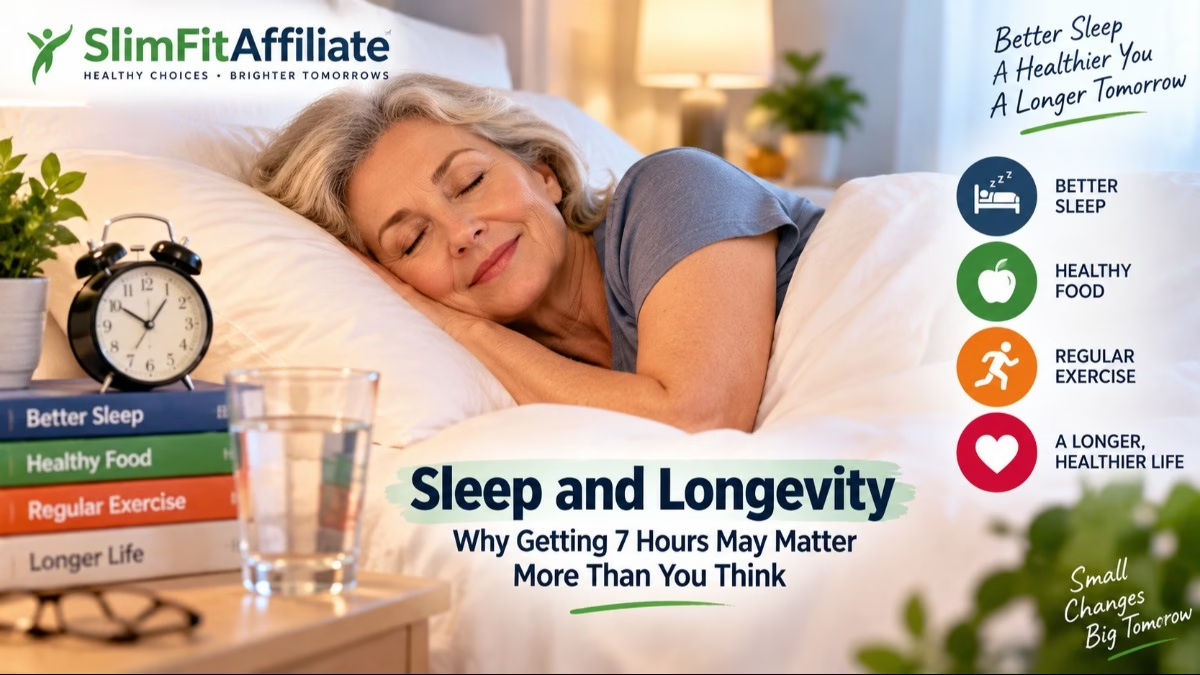
Sleep and longevity: New research suggests that getting enough sleep may be a powerful part of healthy aging—alongside a balanced diet and regular exercise.
We often think about longevity in terms of what we eat and how much we exercise. Both matter. But there is another daily habit that deserves just as much attention: sleep, thus depicting a clear connection between sleep and longevity.
Recent research suggests that consistently getting too little sleep is strongly associated with shorter life expectancy. The finding does not mean sleep is more important than every other healthy habit. Instead, it shows that sleep should be treated as a major part of a healthy-aging strategy.
What does the latest research show?
A study published in SLEEP Advances in December 2025 examined data covering 3,143 U.S. counties between 2019 and 2025. Researchers from Oregon Health & Science University compared insufficient sleep with county-level life expectancy while accounting for factors such as smoking, physical inactivity, food insecurity, employment, education and social connections.
The researchers defined insufficient sleep as less than seven hours per night.
The association was striking. Across most U.S. states, counties with higher levels of insufficient sleep tended to have lower life expectancy. The relationship remained statistically significant even after researchers adjusted for several traditional predictors of mortality.
In their main model, only smoking showed a stronger association with life expectancy than insufficient sleep. When obesity and diabetes were added to the analysis, smoking and obesity showed stronger associations than insufficient sleep.
That distinction matters.
The study does not prove that poor sleep causes people to die earlier, nor does it prove that sleep is more important than diet or exercise. It shows a strong population-level association that deserves further investigation.
New data makes the message even more relevant
The problem is widespread.
According to a CDC report published in April 2026, 30.5% of U.S. adults reported sleeping less than seven hours per day in 2024. Short sleep was particularly common among adults aged 50–64, with 34.5% reporting fewer than seven hours.
A separate 2025 meta-analysis reviewing 79 cohort studies found that adults sleeping fewer than seven hours had a pooled 14% higher risk of all-cause mortality compared with people sleeping seven to eight hours.
These findings add weight to the growing evidence that sleep duration is not simply about feeling refreshed the next morning.
Why does sleep matter for healthy aging?
Sleep affects several systems involved in long-term health.
Poor sleep has been associated with metabolic problems, obesity, diabetes, high blood pressure and cardiovascular disease. The CDC notes that adequate sleep supports both physical health and emotional well-being.
There is also an important connection between sleep and weight management.
When sleep becomes consistently inadequate, appetite regulation, food choices, energy levels and physical activity can all be affected. That means sleep may indirectly influence other healthy-aging behaviors as well.
How much sleep should adults get?
The American Academy of Sleep Medicine and Sleep Research Society recommend that adults regularly get at least seven hours of sleep per night.
The CDC currently recommends:
- Adults 18–60: 7 or more hours
- Adults 61–64: 7–9 hours
- Adults 65 and older: 7–8 hours
Quality matters too. Eight hours in bed does not necessarily mean eight hours of restorative sleep.
What can you do tonight?
Improving sleep does not require a complicated health program.
Try keeping a regular bedtime and wake-up time. Reduce bright screens before bed. Get natural daylight during the day and remain physically active. Keep the bedroom cool, dark and quiet.
And if you regularly snore loudly, wake up gasping, experience excessive daytime sleepiness or cannot sleep despite having enough opportunity, discuss the problem with a healthcare professional.
The SlimFitAffiliate takeaway
Healthy aging is not built on diet or exercise alone. Sleep belongs in the same conversation.
The latest research suggests that consistently sleeping less than seven hours is strongly associated with shorter life expectancy. It is not proof that sleep alone determines how long we live. But it is a powerful reminder that the hours we spend asleep may be just as important to our long-term health strategy as the choices we make while awake.
Sleep well. Eat sensibly. Stay active. And treat all three as parts of the same healthy-aging equation.
#SleepAndLongevity #HealthyAging #SleepHealth #HealthyLifestyle #Longevity
Sources and further reading
- SLEEP Advances — Original 2025 research study
- CDC — Short Sleep Duration Among U.S. Adults, 2024 data
- CDC — About Sleep and recommended sleep duration
- CDC — Sleep and heart health
- American Academy of Sleep Medicine — Adult sleep recommendation
- 2025 meta-analysis on sleep duration and mortality — PubMed Central