
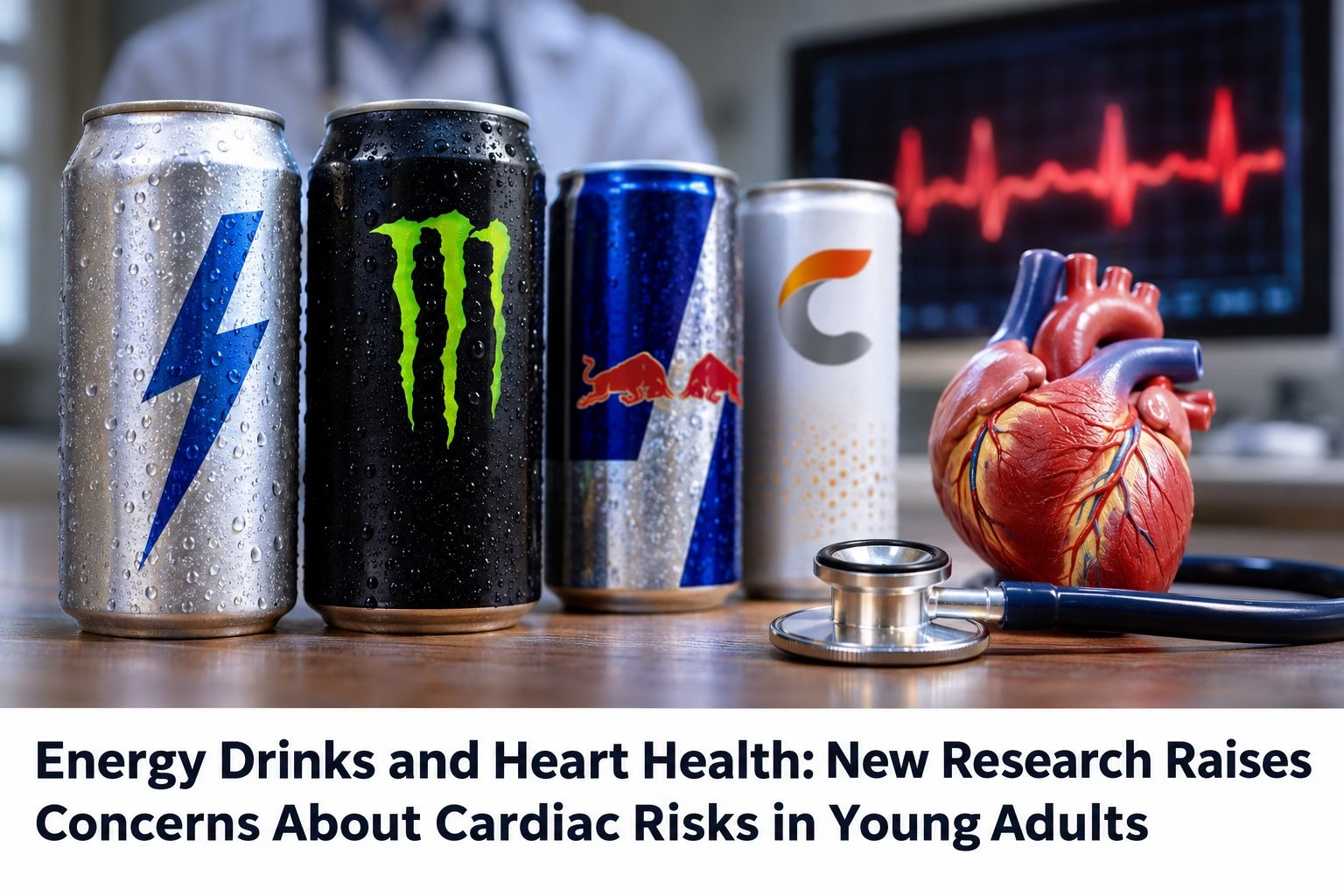
Energy Drinks and Heart Health: New Research Raises Concerns About Cardiac Risks in Young Adults
The growing popularity of energy drinks has brought renewed attention to an important public-health question: Can products marketed to improve alertness, concentration and physical performance also place excessive stress on the heart?
New preliminary research presented by the American Heart Association (AHA) has raised fresh concerns. An analysis of US Food and Drug Administration (FDA) adverse-event reports from 2017 to 2025 found that reports involving caffeine- and stimulant-containing products included substantially higher proportions of serious cardiovascular events than reports involving products without these ingredients.
The findings are particularly relevant to younger adults, who represent a significant proportion of the reported cases. They also raise questions about the widespread consumption of energy drinks before exercise, during long working hours and alongside alcohol.
However, there is an important distinction: the research identifies an association, not proof that energy drinks directly caused these medical emergencies. Understanding what the researchers found, what the findings cannot establish and who may face greater risks is essential before drawing conclusions.
Quick Answer: What Does the New Energy Drink Research Reveal?
A preliminary American Heart Association analysis of 28,345 FDA adverse-event reports found that reports involving caffeine- or stimulant-containing products featured cardiac arrest approximately 11 times more often, heart attacks 4.5 times more often, and ventricular arrhythmias or palpitations four times more often than reports involving products without these stimulants. These figures describe reporting patterns, not an individual’s actual risk.
What the New Research Shows
The research, titled Energy drinks, stimulant products linked to cardiac arrest, heart attack in young adults, was released by the American Heart Association on November 2, 2026.
The findings will be presented at the AHA Scientific Sessions 2026, scheduled for November 6–9 in Chicago, United States. The research abstract is identified as MDP0323.
Researchers examined 28,345 adverse-event reports submitted to an FDA safety database between 2017 and 2025.
Of these:
- 854 reports involved energy drinks or dietary supplements containing caffeine or other stimulants.
- 27,491 reports involved products without these stimulant ingredients.
The researchers compared the cardiovascular events reported in the two groups.
The major cardiovascular findings
| Cardiovascular event | Difference in reporting |
| Cardiac arrest | Approximately 11 times higher |
| Heart attacks | Approximately 4.5 times higher |
| Ventricular arrhythmias | Approximately 4 times higher |
| Heart palpitations | Approximately 4 times higher |
| Elevated heart rate | Nearly 3 times higher |
| Chest pain | Approximately 2.71 times higher |
| Fainting | Approximately 2 times higher |
These findings are concerning because some of these events can be life-threatening and may occur in people who have not previously been diagnosed with cardiovascular disease.
Another important observation was the age distribution. Approximately 45% of reports linking stimulant-containing products with cardiovascular events involved adults aged 18–34.
Similar reporting patterns were observed among men and women.
The researchers also found that the products were not limited to one particular manufacturer. They classified products according to their ingredients rather than individual brands. Consequently, the findings should not be interpreted as evidence against any specific company or energy drink brand.
Background: Why Are Energy Drinks Becoming a Heart Health Concern?
Energy drinks have become a familiar part of modern lifestyles.
Students use them to stay awake during examinations. Professionals consume them to maintain concentration during demanding working hours. Athletes and fitness enthusiasts use them before workouts, while some people rely on them to overcome tiredness.
Brands such as Red Bull, Monster Energy, and Celsius have helped establish energy drinks as mainstream consumer products.
Their popularity is also reflected in the marketplace. The AHA reported that US sales of caffeinated energy drinks exceeded $20 billion in 2024, having more than doubled over the preceding decade.
However, the biological effects of these beverages deserve attention.
What happens when the heart is exposed to excessive stimulants?
The heart operates through an electrical signalling system that coordinates its contractions.
Caffeine stimulates the central nervous system and blocks adenosine receptors. Adenosine normally contributes to sleepiness and influences several cardiovascular processes.
By blocking these receptors, caffeine increases alertness and can influence heart rate, blood pressure and the release of stimulating chemical messengers.
In moderate amounts, caffeine is tolerated by most healthy adults.
However, large doses, particularly when consumed rapidly or combined with other stimulants, can produce unwanted effects, including:
- Increased heart rate.
- Temporary elevation of blood pressure.
- Restlessness and anxiety.
- Sleep disturbances.
- Heart palpitations.
- Abnormal heart rhythms in susceptible individuals.
The concern becomes greater when people consume several stimulant-containing products without calculating their combined caffeine intake.
What is the difference between cardiac arrest and a heart attack?
These two terms are frequently confused, but they describe different medical emergencies.
Heart attack: Usually occurs when blood flow to part of the heart muscle becomes blocked, damaging the affected tissue.
Cardiac arrest: Occurs when the heart suddenly stops pumping blood effectively, generally because of an electrical malfunction. The person collapses and requires immediate emergency treatment.
A severe heart attack can sometimes trigger cardiac arrest, but the two conditions are not interchangeable.
Ventricular arrhythmia is another important term. It describes an abnormal electrical rhythm originating in the heart’s lower chambers. Certain ventricular arrhythmias can prevent the heart from pumping blood effectively and may become life-threatening.
How Can Energy Drinks Affect the Cardiovascular System?
The effects of energy drinks cannot be attributed to caffeine alone in every case. Their formulations vary considerably, and some contain multiple stimulant ingredients.
1. High caffeine concentrations
Caffeine is the primary stimulant in most conventional energy drinks.
According to the FDA, up to 400 milligrams of caffeine daily is an amount not generally associated with negative effects in most healthy adults.
However, this is not a universal safety guarantee.
Some energy drinks contain considerably more caffeine per fluid ounce than ordinary brewed coffee. The AHA’s November 2026 research announcement notes that certain products may contain up to three times as much caffeine per fluid ounce as brewed coffee.
The total amount consumed matters more than the name or size of the beverage.
2. Additional stimulant ingredients
The AHA researchers also examined products containing ingredients beyond conventional caffeine.
These included:
- Guarana and yerba mate extracts.
- Theobromine.
- Green tea and green coffee extracts.
- Synephrine.
- Yohimbine.
- Ephedra-related ingredients.
- DMAA and higenamine.
Some of these ingredients have stimulant properties and may influence cardiovascular activity.
When several stimulating compounds are combined, their overall effects may be more difficult for consumers to assess.
3. Increased sympathetic nervous system activity
The sympathetic nervous system is responsible for the body’s fight-or-flight response.
Stimulants can increase sympathetic activity, potentially raising heart rate and blood pressure.
In susceptible individuals, this may contribute to abnormal electrical activity in the heart.
This provides a biologically plausible explanation for the cardiovascular concerns identified in the research. However, the precise contribution of individual ingredients remains uncertain.
Key Findings: What Makes This Research Important?
Three observations deserve particular attention.
Young adults are not necessarily protected by their age
The finding that approximately 45% of the relevant cardiovascular reports involved people aged 18–34 challenges the assumption that serious heart problems are exclusively associated with older adults.
Young people may have undiagnosed electrical or structural heart conditions. High stimulant exposure, intense physical activity or other substances could potentially expose an underlying vulnerability.
This does not mean that energy drinks commonly cause cardiac emergencies in young adults. It means that age alone should not be treated as a guarantee of safety.
Mixing energy drinks with alcohol or other substances deserves caution
The AHA researchers identified combinations involving alcohol, drugs and intense exercise as possible factors that could help explain the observed patterns.
Mixing alcohol with energy drinks is particularly concerning because caffeine can make someone feel more alert without reversing alcohol-related impairment.
A person may therefore underestimate intoxication and continue drinking or engaging in risky activities.
Combining multiple stimulants can also increase total exposure.
Brand names do not tell the complete safety story
The researchers grouped products according to their ingredients rather than individual brands.
This is important because a product marketed as a fitness supplement, pre-workout formula or energy booster may contain stimulant compounds similar to those found in energy drinks.
Consumers should therefore examine the ingredient list and total caffeine content rather than relying exclusively on marketing claims.
Expert Perspective: What Are Cardiologists Likely to Take Away?
The findings should be considered alongside the American Heart Association’s broader scientific assessment of caffeine and cardiovascular health published in 2026.
A scientific statement published in Circulation on July 20, 2026, reviewed available evidence concerning caffeine consumption and heart disease.
It highlighted an important distinction: research on moderate caffeine consumption, particularly through ordinary coffee, cannot automatically be applied to energy drinks containing concentrated caffeine and additional stimulants.
Some studies of regular coffee consumption have found neutral or potentially beneficial cardiovascular associations. However, evidence concerning the high caffeine doses found in energy drinks is more limited and generally raises greater concerns.
Gregory M. Marcus, MD, who chaired the AHA’s 2026 scientific statement, commented on the new research and emphasized that the analysis does not establish causation.
He also highlighted the need for further investigation into whether stimulant-containing products are responsible for the reported cardiovascular events.
One practical implication is that doctors should consider asking younger patients experiencing chest pain, palpitations or fainting whether they regularly consume energy drinks or stimulant supplements.
American Heart Association+1
Potential Benefits and Limitations of Energy Drinks Research
Potential benefits of the findings
The research provides several useful contributions to public health.
- Early warning: It identifies a potential safety signal that deserves more detailed investigation.
- Better awareness: Consumers may become more conscious of caffeine intake and stimulant combinations.
- Improved medical screening: Doctors may pay greater attention to energy drink consumption when evaluating unexplained cardiovascular symptoms.
- Product monitoring: The findings strengthen the argument for more systematic safety surveillance of energy drinks and stimulant supplements.
- Future research: They provide a starting point for investigating the cardiovascular effects of individual ingredients and combinations.
Important limitations that readers should understand
Despite the striking figures, the research has significant limitations.
First, the study is based on voluntary adverse-event reports.
Not every person experiencing a medical problem reports it to the FDA. Similarly, not every person consuming energy drinks develops a health complication.
Second, the analysis cannot establish cause and effect.
A heart attack reported after consuming an energy drink does not automatically mean that the beverage caused it. Other factors, including underlying disease, medications, alcohol consumption and other substances, may have contributed.
Third, the researchers did not establish the actual risk among consumers.
The database does not provide a reliable denominator showing how many people consumed these products without experiencing an adverse event.
Consequently, the findings cannot tell us the percentage of energy drink consumers who will develop heart problems.
Fourth, the research is preliminary.
The AHA has explicitly stated that the conference abstract has not undergone full peer review. Its findings should therefore be treated as an early scientific signal rather than a definitive clinical conclusion.
The FDA also cautions that adverse-event reports cannot independently establish causation or calculate the incidence of medical complications.
American Heart Association+2
What This Means for Patients and Public Health
The new findings have implications for several groups, particularly young adults, athletes and people who regularly consume stimulant-based products.
Who should be especially cautious?
Although individual sensitivity varies, particular attention is warranted for:
- People with high blood pressure or existing cardiovascular disease.
- Individuals with a history of heart rhythm abnormalities.
- People who experience unexplained palpitations, dizziness or fainting.
- Individuals taking medications that may interact with stimulants.
- Young people and teenagers.
- People combining energy drinks with alcohol, pre-workout supplements or other stimulant products.
People with existing heart conditions should discuss caffeine consumption with their doctors rather than assume that commercially available products are automatically safe.
Are energy drinks safe for people without heart disease?
There is no evidence from this preliminary analysis that every healthy energy drink consumer faces a significant immediate risk.
Occasional consumption and excessive consumption are not necessarily equivalent.
Nevertheless, people without a diagnosed heart condition may still have previously undetected cardiovascular vulnerabilities.
The absence of known heart disease should not be interpreted as unlimited tolerance for stimulants.
Practical Health Tips: How to Reduce Potential Cardiovascular Risks
Consumers do not necessarily need to eliminate every source of caffeine. However, understanding total stimulant exposure is important.
Here are seven practical precautions.
1. Check the caffeine content before purchasing
Read the product label carefully. Pay attention to caffeine per serving and the number of servings in the container.
2. Calculate your total daily caffeine intake
Remember that caffeine comes from coffee, tea, energy drinks, chocolate, supplements and certain medications.
The FDA identifies 400 mg daily as an amount generally not associated with negative effects in most healthy adults. However, people with specific medical conditions may need substantially lower amounts.
3. Avoid combining energy drinks with alcohol
Caffeine does not reverse alcohol intoxication. The combination can encourage further alcohol consumption and make it harder to recognise impairment.
4. Be careful with pre-workout supplements
Some fitness products contain concentrated caffeine and multiple stimulants. Avoid combining them with energy drinks unless a healthcare professional has reviewed their ingredients and suitability.
5. Do not use energy drinks as a substitute for sleep
Regularly depending on stimulants to overcome inadequate sleep can create an unhealthy cycle of fatigue and excessive caffeine consumption.
6. Young people should avoid energy drinks
The American Academy of Pediatrics advises against energy drinks for children and adolescents because of their caffeine and stimulant content.
7. Recognise warning signs
Chest pain, severe breathlessness, fainting and sustained or severe palpitations require medical assessment.
If someone collapses, becomes unresponsive or is not breathing normally, call emergency services immediately. Begin CPR and use an automated external defibrillator (AED), if available, while awaiting professional assistance.
What Happens Next? Future Research and Regulatory Developments
The November 2026 findings raise several questions that researchers will need to investigate.
Future studies should ideally include:
- Larger population-based studies comparing energy drink consumption with cardiovascular outcomes.
- Research examining the effects of different caffeine concentrations.
- Clinical investigations into combinations of caffeine and other stimulant ingredients.
- Studies assessing the effects of energy drinks during intense physical exercise.
- Research examining whether people with previously undiagnosed heart conditions face greater risks.
- Better monitoring of adverse events associated with dietary supplements and energy drinks.
Another important issue concerns product regulation.
In the United States, energy drinks and stimulant supplements are generally regulated as foods or dietary supplements rather than prescription medications. Consequently, they do not undergo the same premarket approval and safety testing required for medicines.
This distinction deserves public attention.
Better ingredient transparency, clearer caffeine labelling and more effective adverse-event monitoring could help consumers make informed decisions.
The FDA and other regulatory authorities may also benefit from more comprehensive safety data as the market for stimulant-based beverages continues to expand.
The AHA research provides a reason to investigate these questions more closely, but it does not, by itself, establish that existing products should be withdrawn from the market.
Conclusion: Energy Drinks May Offer Alertness, but Heart Health Should Come First
Energy drinks have become an integral part of modern consumer culture. Their appeal is understandable: people want more energy, improved concentration and better physical performance.
However, the latest American Heart Association research raises important questions about the cardiovascular safety of products containing high concentrations of caffeine and additional stimulants.
The reported differences in cardiac arrest, heart attacks and abnormal heart rhythms deserve attention, particularly because a substantial proportion of the associated reports involved adults aged 18–34.
At the same time, scientific accuracy requires us to recognise the limitations. These are preliminary findings based on voluntary FDA reports, not a controlled clinical trial proving that energy drinks cause heart attacks or cardiac arrest.
The broader message is therefore one of informed consumption rather than unnecessary panic.
Consumers should understand what goes into their beverages, monitor their total stimulant intake and avoid potentially risky combinations. People with existing cardiovascular conditions should seek individual medical advice.
Energy may be temporary, but cardiovascular health is a lifelong responsibility. The convenience of an instant energy boost should never come at the expense of understanding its potential effects on the heart.
#EnergyDrinks #HeartHealth #CardiovascularHealth #CaffeineRisks #MedicalResearch2026
Medical Disclaimer
This article is intended for educational and informational purposes only. It does not constitute medical advice, diagnosis or treatment. Individuals with cardiovascular conditions or concerns about caffeine consumption should consult a qualified healthcare professional before changing their dietary or supplement habits. Seek emergency medical assistance for suspected cardiac emergencies.
Research References and Sources
The following are direct scientific and official sources suitable for inclusion in your article’s reference section.
1. American Heart Association – November 2, 2026: Energy drinks, stimulant products linked to cardiac arrest, heart attack in young adults.
2. American Heart Association – Scientific Statement, 2026: Caffeine and Cardiovascular Disease. Published in Circulation, DOI: 10.1161/CIR.0000000000001454.
3. US Food and Drug Administration: Spilling the Beans: How Much Caffeine Is Too Much?.
4. FDA – Adverse Event Reporting: Food and Dietary Supplement Adverse Event Database.
5. National Institutes of Health: Dietary Supplements for Exercise and Athletic Performance.