
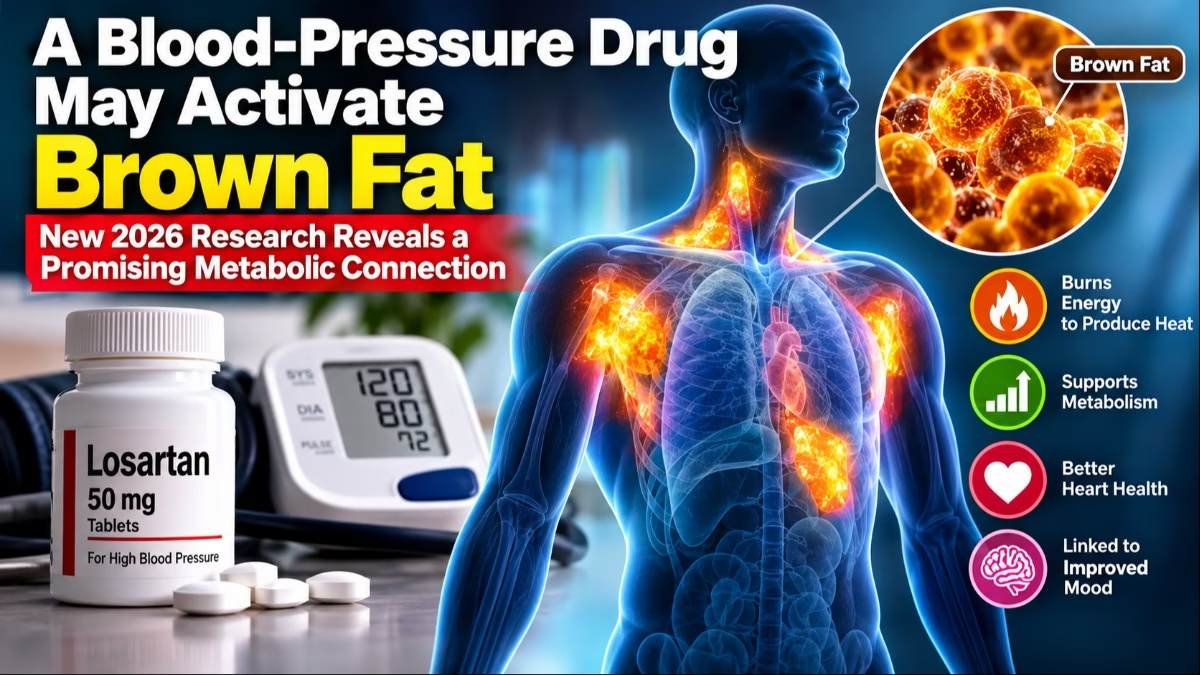
Brown fat activation: New 2026 research suggests losartan may stimulate energy-burning brown fat and influence metabolic activity. Scientists are exploring its potential implications for metabolic health, but human weight-loss benefits have not yet been established-Research source: Nature, October 14, 2026.
Can Losartan Activate Brown Fat and Improve Metabolism?
New research published in Nature on October 14, 2026, has uncovered a potentially important connection between the blood-pressure drug losartan and brown fat, a type of body fat that burns energy to produce heat. The NIH-funded study suggests that activating this tissue could offer new avenues for metabolic health research, although its effectiveness as a weight-loss treatment in humans remains unproven.
For people interested in obesity, metabolism and healthy weight management, the findings are worth understanding—but they should not be mistaken for a new prescription for losing weight.
What Is Brown Fat, and Why Does It Matter?
Our bodies contain different types of fat, each performing a distinct function.
White adipose tissue primarily stores excess energy. Brown adipose tissue (BAT), on the other hand, contains abundant mitochondria that help convert stored energy into heat through a process called thermogenesis.
Brown fat is found mainly around the neck, collarbone, chest and armpits. Although adults generally have less active brown fat than infants, research increasingly suggests that this tissue contributes to energy expenditure and metabolic regulation.
Featured snippet: What does brown fat do?
Brown fat burns energy to generate heat. Scientists are investigating whether increasing its activity could help regulate blood sugar, improve metabolic health and eventually support obesity treatment.
What Did the New 2026 Study Discover?
The research, published in Nature under the title Artificial intelligence-enabled clinical phenotyping of human brown fat, combined large-scale patient data, artificial intelligence and laboratory experiments.
Researchers led by Paul Cohen of Rockefeller University and colleagues analysed medical records and PET/CT imaging from more than 100,000 patients.
The team found that people with detectable brown fat had lower rates of several cardiometabolic conditions. Greater brown fat activity was also associated with a healthier metabolic profile. The researchers additionally identified associations with lower rates of anxiety and depression.
Importantly, these findings are associations, not proof that brown fat directly prevents these diseases.
The study also identified a notable medication-related finding: patients taking certain angiotensin receptor blockers (ARBs), a class of drugs used to treat high blood pressure, showed positive associations with detectable brown fat.
Why Is Losartan Attracting Attention?
Losartan is an established prescription medicine used to treat hypertension. Researchers investigated whether its association with brown fat might reflect a direct biological effect.
Their laboratory experiments found that losartan increased the activity of brown fat cells, including changes involving UCP1, a protein central to heat production.
The team then tested losartan in mice. Treated animals showed increases in energy expenditure, oxygen consumption and carbon dioxide production under the experimental conditions.
These findings suggest that losartan may influence metabolic activity through pathways distinct from its established blood-pressure-lowering action.
However, there is a crucial limitation: increased energy expenditure in mice does not establish meaningful weight loss in humans. The study did not demonstrate that taking losartan helps people lose body fat or treat obesity.
Does Brown Fat Activation Mean a New Weight-Loss Treatment?
Not yet. The discovery is promising because it identifies a potential therapeutic pathway that researchers could investigate further.
A systematic review published in 2022 examined 47 clinical trials involving interventions intended to activate brown fat or increase thermogenesis. It concluded that increases in energy expenditure did not consistently translate into substantial weight loss and that larger, better-designed studies were needed.
Read the review in Frontiers in Endocrinology.
For anyone trying to lose weight, the distinction matters. Burning slightly more energy does not automatically produce significant fat loss. Appetite, food intake, physical activity, sleep and long-term adherence also influence body weight.
Before brown fat activation can become an established obesity treatment, researchers need controlled human trials that evaluate safety, dosage, sustained metabolic effects and actual changes in body weight.
Can You Take Losartan to Burn Fat?
No. Losartan should not be started, increased or substituted for another medication to activate brown fat or lose weight.
Although it has an established safety profile for approved uses, it can cause side effects, including dizziness, and may affect kidney function and blood potassium levels. It also carries serious risks during pregnancy.
Anyone already taking losartan should continue following their prescribing clinician’s instructions. Discuss any medication changes with a qualified healthcare professional.
For now, established weight-management strategies remain the practical choice: a balanced eating pattern, regular physical activity, adequate sleep and medical guidance when additional obesity treatment is appropriate.
Ravi’s Research Takeaway for Weight Management
The most interesting aspect of this discovery is not that a blood-pressure medicine has suddenly become a slimming drug. It is that scientists are using artificial intelligence and extensive clinical datasets to identify biological pathways that may eventually lead to new treatments.
If future human trials confirm the findings, brown fat activation could become a useful part of metabolic medicine. Until then, losartan belongs in the category of promising research—not proven weight-loss solutions.
For readers of SlimFitAffiliate.com, the message is straightforward: follow the science, distinguish laboratory findings from clinical evidence, and avoid products or medication claims that promise effortless fat burning.
#BrownFat #WeightLossResearch #MetabolicHealth #ObesityResearch #HealthyWeight
References and Research Sources
- Gómez-Banoy N, et al. Artificial intelligence-enabled clinical phenotyping of human brown fat. Nature, October 14, 2026. Read the original research. DOI: 10.1038/s41586-026-11162-7.
- National Institutes of Health (NIH). A blood-pressure drug may activate health-promoting brown fat, October 14, 2026. Read the NIH research announcement.
- Interventions associated with brown adipose tissue activation and the impact on energy expenditure and weight loss: A systematic review. Read the published review.
Medical disclaimer: This article is for educational purposes only and is not a substitute for professional medical advice, diagnosis or treatment.